Digital Legacy: Why Cryptocurrency Belongs in Every Estate Plan

Banner image for “Digital Legacy: Why Cryptocurrency Belongs in Every Estate Plan” by DK Law Group, emphasizing the importance of including crypto assets in modern estate planning.
Cryptocurrency—like Bitcoin, Ethereum, and other digital coins—is becoming a common part of many people’s wealth. Unlike cash in the bank or physical property, crypto exists only online and requires special care in estate planning. There’s no bank manager to turn to and no "forgot password" button if a private key is lost. If your crypto isn’t handled correctly in your estate plan, those digital assets could be lost forever. In fact, by some estimates about 20% of all Bitcoin is already permanently lost due to forgotten passwords or missing keys. Estate planning for cryptocurrency is therefore essential to protect this part of your legacy. In this post, we’ll explain why cryptocurrency belongs in every estate plan and how you can protect your digital legacy for your heirs.
Physical Bitcoin tokens on a digital chart. Without proper estate planning, digital assets like cryptocurrency can become permanently inaccessible to your loved ones.

Visual representation of how cryptocurrency like Bitcoin is held in digital wallets, laying the foundation for estate planning with crypto assets.
What is Cryptocurrency?
Cryptocurrency is a form of digital money that exists only online, secured by encryption. It’s stored in digital “wallets” that are protected by private passcodes (keys) known only to the owner. Many people invest in crypto as part of their overall wealth portfolio. However, if no one knows how to access your crypto wallets or exchange accounts after you pass away, those assets could be impossible to recover. There is no central authority (like a bank) to petition for access – if the private keys are lost, the crypto is effectively gone. This makes estate planning for crypto more important than ever.

llustration of a Bitcoin integrated with a formal estate plan folder, emphasizing the importance of including cryptocurrency in digital inheritance strategies.
Why Include Cryptocurrency in Your Estate Plan?
If you don’t include instructions for cryptocurrency in your estate plan, your loved ones might not even know it exists. Even if they do know about it, they won’t be able to access it without the right information. Unlike a house or a bank account, crypto isn’t tied to an institution that can help recover it, and courts have little recourse if keys are missing. Here are some key reasons to address crypto in your estate plan:
Invisible Wealth: Digital assets don’t leave paper trails. Without clear documentation, family members may never discover your Bitcoin or other coins. (It’s estimated roughly 1 in 6 Americans now owns cryptocurrency pewresearch.org, so digital wealth is more common than you might think.) If you don’t tell anyone about your holdings, they could be overlooked entirely.
Access Barriers: Even if relatives know you have crypto, they can’t retrieve it without the private keys, seed phrases, or login credentials to your wallets. Exchanges and blockchain networks won’t hand over access just because someone inherits your computer; there is no “forgot password” help desk for crypto. Failing to leave behind keys or instructions is a recipe for permanent loss of the asset.
Irreversible Loss: Crypto is decentralized, which means once it’s lost, it’s lost. Proper estate planning ensures your digital wealth isn’t stranded in cyberspace. (Stories abound of people losing millions in crypto due to misplaced passwords – about 20% of all Bitcoin is believed to be lost forever because owners can no longer access their wallets investopedia.com.) Including crypto in your estate plan is crucial to prevent your investments from vanishing into the digital void.
Smooth Inheritance: Just as you would plan for physical assets or bank accounts, planning for crypto makes the inheritance process easier and less stressful for your beneficiaries. With clear instructions and legal documentation, your loved ones can access and transfer your digital assets smoothly – avoiding legal hurdles or technical headaches. This also ensures that any tax obligations (since the IRS treats cryptocurrency as property bluesevencontent.com) or probate issues are handled properly, just as with the rest of your estate.
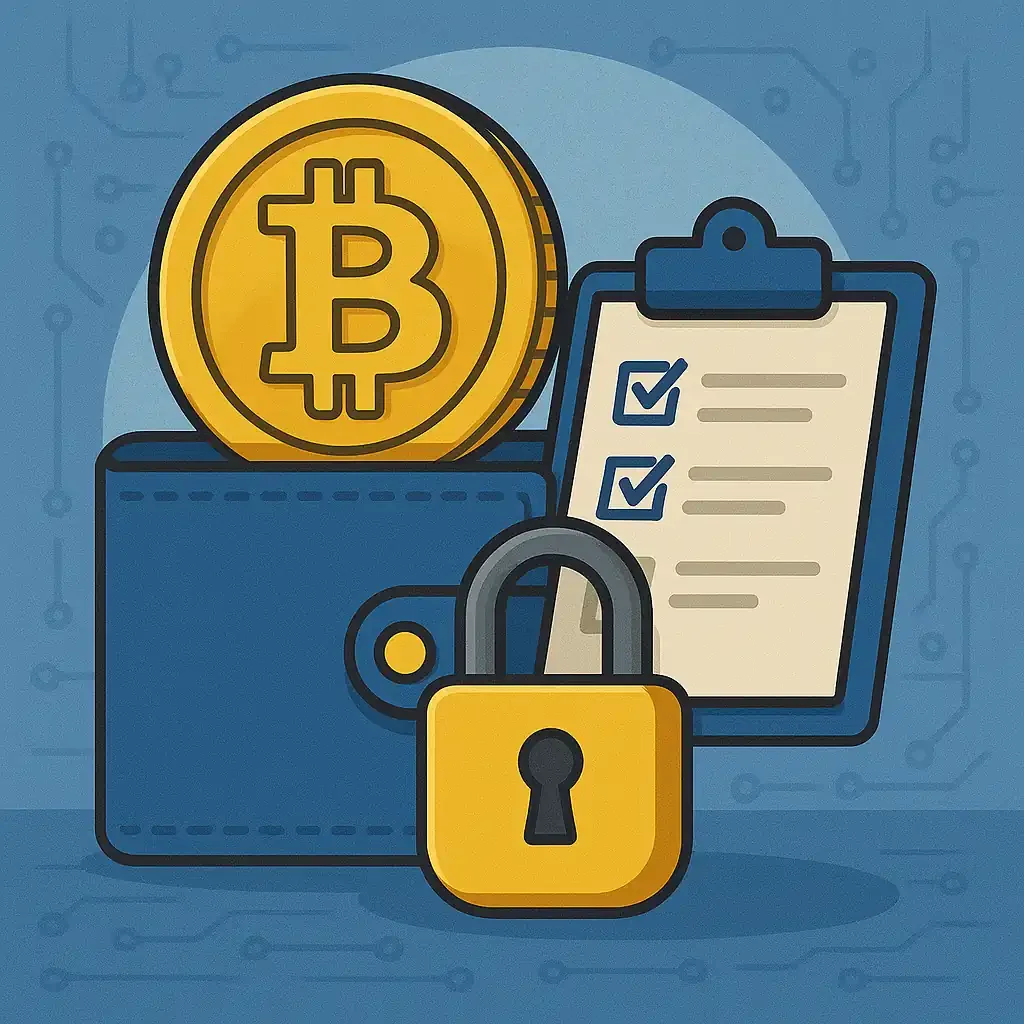
A secure digital wallet with a Bitcoin coin, padlock, and checklist, highlighting steps to protect digital assets in your estate plan.
How to Protect Your Digital Assets
Including cryptocurrency in your estate plan isn’t difficult, but it does require a few extra steps. By taking the following actions, you can make sure your digital assets are safe, accessible, and passed down according to your wishes:
A hardware cryptocurrency wallet (Coldcard device) used for offline storage of private keys. Keeping your crypto keys in secure physical devices or vaults can be a smart part of your estate plan, as long as your executor knows how to find and use them.
Inventory Your Crypto Holdings: Make a detailed list of all the cryptocurrency you own. Include the types of coins or tokens (e.g., Bitcoin, Ethereum) and where they are held – for example, the names of exchanges (like Coinbase) or wallet apps, and any hardware wallets you use. This inventory ensures your executor and heirs know what digital assets you have. It’s similar to listing your bank accounts or insurance policies in a traditional estate plan.
Secure Your Private Keys and Passwords: For each crypto account or wallet, securely record the information needed to access it. This may include private keys, recovery seed phrases, PINs, or account passwords. Do NOT write these in your will (which becomes public); instead, store them in a very safe place. Good options include an encrypted password manager (with emergency access features), a locked safe or safety deposit box, or even a hardware wallet sealed with instructions. The goal is to protect this sensitive data from theft during your life, yet ensure it can be found by the right person after your death.
Designate a Trusted Person for Access: Make sure someone you trust knows about your crypto and how to access the keys when the time comes. This could be your spouse, a close family member, or a professional executor. You might give this person sealed instructions or split the information (for example, store the password in one place and the device in another). The key is that at least one responsible person can step in to help your heirs retrieve the assets. Without this, your family could be scrambling in the dark. (We’ll discuss appointing a formal “digital executor” in the next section.)
Leave Clear Instructions in Your Estate Plan: In your will or trust documents, explicitly outline what should happen with your cryptocurrency. Identify who should inherit each asset (just as you would for a bank account or property) and how they should access it. You might state where the key information is stored (for instance, “My executor shall retrieve the envelope in my bank deposit box which contains instructions to access my digital wallets”). Be very careful not to put actual private keys or passwords in the will itself; instead, give guidance on obtaining them. Clear instructions will prevent confusion and reduce the risk of mistakes or lost assets.
Keep Your Plan Updated: Digital assets can change quickly – you might buy new coins, move funds to a different wallet, or update your security settings. Treat your crypto inventory and access information as a living document. Revisit it regularly (for example, every 6–12 months or whenever you make a big change in your holdings) to ensure it’s up to date. Also verify that your chosen trusted person or executor is still willing and able to handle the responsibility. An outdated plan can be almost as bad as no plan at all, so maintaining it is important.
Taking these steps will significantly reduce the chances of your digital wealth getting lost. For added peace of mind, consider working with an estate planning attorney who understands digital assets. We at DK Law Group can guide you through setting up these measures properly and securely, so you don’t have to navigate it all on your own.
Naming a Digital Executor
One of the most important moves you can make is naming a digital executor. A digital executor (sometimes called a digital fiduciary) is someone you appoint specifically to handle your online accounts and digital assets, including cryptocurrency, after you pass away. This role can be filled by the same person as your general executor, or you might choose a different individual who is more tech-savvy. Here’s what to consider:
Choose the Right Person: The ideal digital executor is trustworthy and comfortable with technology. This person should understand how crypto wallets and two-factor authentication work, or be willing to learn. It might be a family member who is knowledgeable about crypto, or even a professional advisor. What matters is that they can follow your instructions to access and manage your digital assets without getting overwhelmed or making mistakes.
Legal Authorization: Simply naming someone in your own notes isn’t enough — you need to authorize them in your legal estate documents. In your will or trust, explicitly grant your digital executor permission to access and manage your online accounts and cryptocurrencies. (Many states have adopted laws, such as the Revised Uniform Fiduciary Access to Digital Assets Act, that allow an appointed person to access digital accounts only if you explicitly give permission in your estate plan.) By putting it in writing, you empower your digital executor to work with tech companies or use your keys without running into legal barriers.
Clear Instructions: Work with your attorney to leave clear, step-by-step instructions for your digital executor. For example, if you have a hardware wallet, the instructions might note where the device is kept and how to use the recovery phrase. If you use a particular crypto exchange, you might include the login ID in your paperwork and let the executor know the password is in your password manager. The more straightforward and detailed your guidance, the less chance of confusion. Remember, handling someone’s digital assets can be complex – your executor will appreciate a roadmap.
Security and Privacy: When planning for a digital executor, balance giving them enough information to do the job with keeping your assets secure. You might not want to hand over all your keys while you’re alive (due to theft risk), so instead arrange a secure way for them to get what they need. This could involve sealed letters, splitting knowledge between parties, or using services that store digital asset instructions for future release. Your estate attorney can advise on a safe setup. The goal is that when the time comes, your executor can access your crypto efficiently, but until then, your secrets stay safe.
At DK Law Group, we help you choose the right digital executor and craft the necessary documents. We ensure your instructions are unambiguous so there’s no confusion or delay in carrying out your wishes. Naming a capable digital executor is like appointing a technology gatekeeper for your estate – it’s a vital step to protect your digital legacy.
How DK Law Group Can Help Protect Your Digital Legacy
Planning for digital assets is a new frontier, but you don’t have to do it alone. DK Law Group understands the importance of managing cryptocurrency within your estate plan, and we stay up-to-date on the best practices and laws surrounding digital inheritance. When you work with us, we make sure your estate plan covers all your assets, traditional and digital alike.
Our team has extensive experience with every aspect of estate planning. We handle everything from establishing a Special Needs Trust for a disabled family member to advising clients who have inherited property — and now we’re leading the way in safeguarding digital assets like cryptocurrency. We take a comprehensive approach so that nothing is overlooked. Your estate plan will address everything that matters to you, whether it’s a beloved family home, a set of heirloom jewelry, or a Bitcoin wallet.
In practice, that means we help you document your crypto holdings and access keys properly and choose the best tools to secure them. For example, if you decide to use a hardware wallet or an encrypted vault for your private keys, we’ll guide you on how to incorporate that into your plan (and how to let your executor know where to find it). We also ensure your plan includes clear provisions for your “digital executor” or whoever will be handling the online side of your estate. With our guidance, your instructions for every asset — from sentimental heirlooms and personal property to cutting-edge crypto investments — will be clearly laid out and legally sound.
Most importantly, we give you peace of mind. By partnering with an experienced estate planning firm, you can rest assured that nothing will slip through the cracks. Your digital legacy will be protected just as strongly as your traditional legacy.
Conclusion
As cryptocurrency becomes a larger part of modern wealth, it’s essential to include it in your estate plan. Without the right precautions, your crypto assets could be lost forever – something no one wants, especially when real money (and loved ones’ future benefits) are at stake. By creating a solid plan for your digital assets now, you are protecting your digital legacy just as you do your home, investments, or heirlooms. You’ll ensure your loved ones can access your crypto investments when the time comes, without unnecessary hassle or heartache.
Don’t let your bitcoins, tokens, and online accounts fall into oblivion due to neglect. Take steps now to bring them under the umbrella of your estate plan. It’s about preserving the value you’ve built and passing it on to the next generation.
Call DK Law Group today at (443) 739-6724 or email us at diana@dklawmd.com to start building your estate plan – including robust protection for your cryptocurrency and other digital assets. Our team is here to help you safeguard both your digital and traditional wealth for the future. If you found this article helpful, feel free to share it with anyone else who might benefit from preparing their own digital legacy!