How to Pay Less Tax Legally: Smart Tax Planning Strategies

A professional banner image for a law firm featuring a client and advisor reviewing tax planning documents. The design emphasizes proactive tax strategies, legal compliance, and reducing tax liability. Includes bold headline text “Guide to Tax Planning” and a callout encouraging individuals to stop overpaying in taxes, alongside DK Law Group branding.
Yes, you can often pay less tax legally by planning ahead, reducing taxable income where appropriate, using deductions and credits correctly, and making smart decisions about business structure, timing, investments, and property before deadlines pass.
At DK Law Group, we help clients think through the legal side of planning decisions that can affect taxes, especially in business, estate, and property-related matters. We do not replace your CPA or tax preparer. Instead, we work alongside them when legal strategy, ownership structure, estate planning, or major transactions overlap with tax planning.
In This Guide
the best way to lower taxes lawfully
how to reduce taxable income
the difference between deductions and credits
retirement and year-end planning strategies
tax planning for business owners
investments, capital gains, and property issues
when to talk to a tax planning attorney or advisor

A professional illustration showing proactive tax planning with a roadmap, calendar, legal documents, and financial icons to represent the best way to pay less tax legally.
What Is the Best Way to Pay Less Tax Legally?
The best way to pay less tax legally is to plan before a taxable event happens.
That usually means asking the right questions early:
How is income being earned and reported?
Are there deductions or credits available?
Is the business entity still the right one?
Should income or expenses be timed differently?
Will a sale, transfer, or investment decision trigger avoidable tax consequences?
Waiting until tax season often limits your options. If you start planning before year-end, before a business sale, or before a large transaction closes, you may still have time to make decisions that reduce tax exposure lawfully.
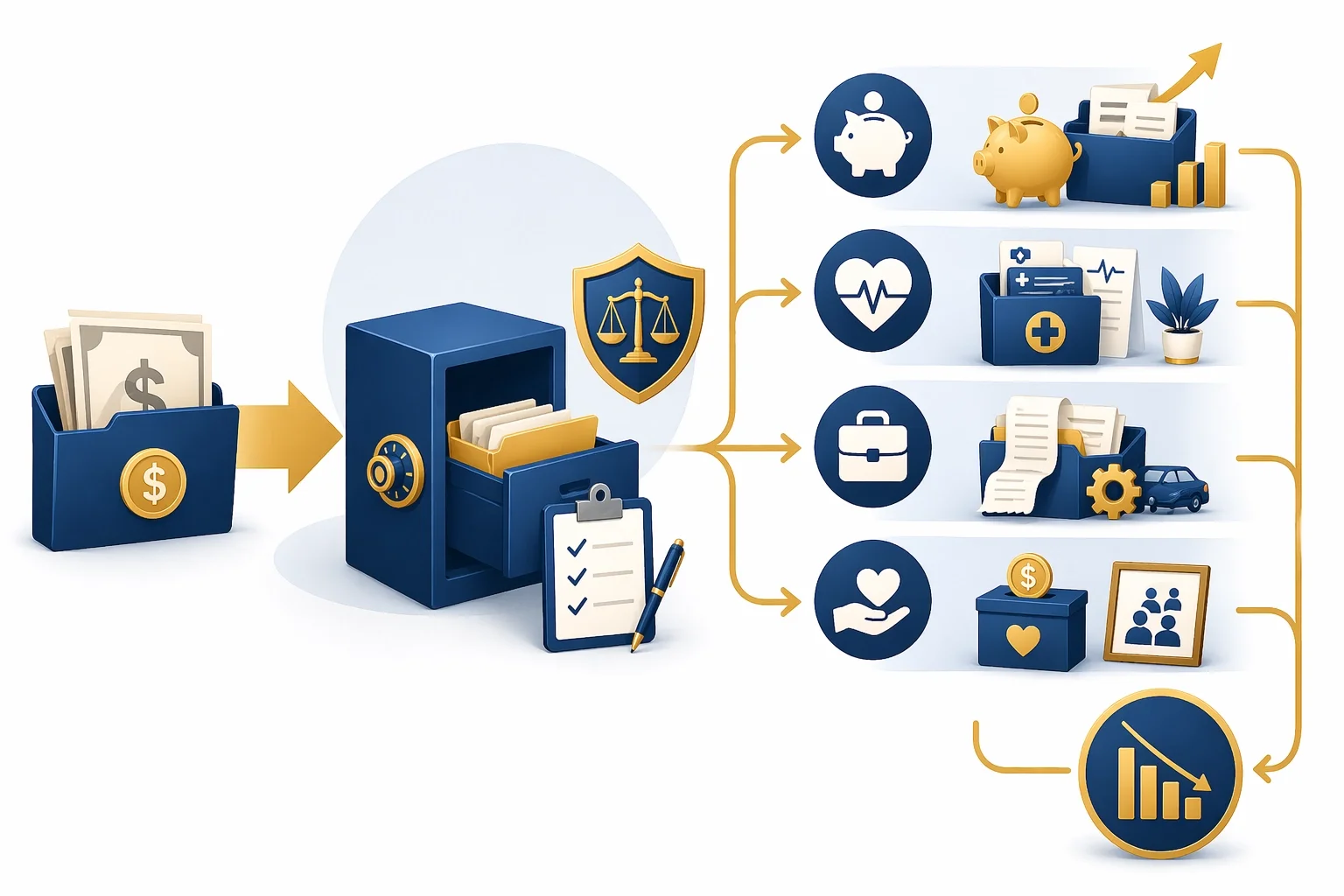
A structured financial illustration showing income being allocated into tax-reducing categories such as retirement savings, qualified expenses, and charitable contributions.
Reduce Your Taxable Income
One of the most direct ways to lower taxes is to reduce taxable income where the law allows.
Depending on your situation, that may include:
contributing to retirement accounts
making eligible Health Savings Account contributions
claiming legitimate business expenses
coordinating charitable giving
structuring compensation and income thoughtfully
For business owners, recordkeeping matters just as much as strategy. Even a valid expense may not help if it is poorly documented. Good planning is not about aggressive shortcuts. It is about using the rules properly and keeping records strong enough to support your position if questions arise later.
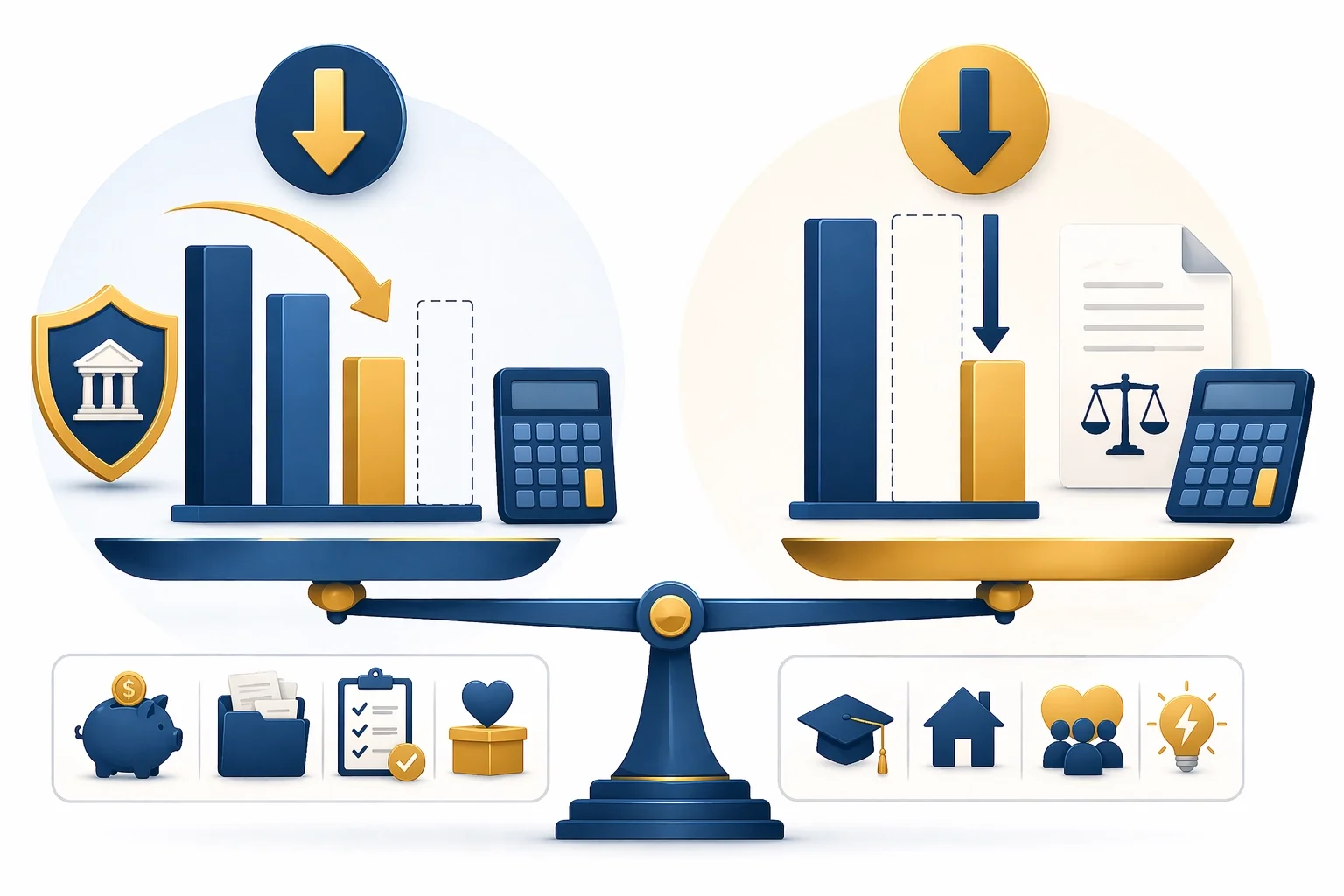
A comparison-style illustration showing how tax deductions reduce taxable income while tax credits directly reduce the amount of tax owed.
Understand Tax Deductions vs. Tax Credits
Deductions and credits can both lower your tax bill, but they do not work the same way.
A tax deduction reduces the amount of income that is subject to tax. A tax credit reduces the amount of tax owed directly.
That distinction matters.
For example:
deductible business expenses may lower taxable income
a qualifying credit may reduce the actual tax bill dollar for dollar
Many people focus on deductions and overlook credits. Others assume every expense is deductible when it is not. A careful review of both deductions and credits is often one of the simplest ways to avoid overpaying.
Maximize Retirement Contributions
Retirement planning is one of the most common lawful ways to reduce current taxes while also building long-term security.
Depending on eligibility, useful tools may include:
Traditional IRAs
401(k) plans
SEP IRAs
Solo 401(k)s
SIMPLE IRAs
A self-employed professional, for example, may be able to reduce taxable income significantly through retirement plan contributions if the account is set up and funded correctly.
Because contribution rules and limits change, current IRS guidance should always be reviewed before acting.
Time Income and Expenses Carefully
Timing can have a major effect on taxes.
In the right circumstances, it may help to:
defer income into a later year
accelerate deductible expenses into the current year
plan charitable contributions before year-end
coordinate bonuses, owner draws, or business purchases more carefully
For example, a business expecting a higher-income year may benefit from a different timing strategy than one expecting a temporary slowdown.
These decisions should be made carefully. Timing can help in one year and create problems in another if it is not coordinated with the bigger picture.
Use Business Tax Strategies If You Own a Company
Business owners often have more planning opportunities than wage earners, but those opportunities come with more complexity.
Common issues include:
entity selection and tax elections
owner compensation
accountable plans and reimbursements
retirement plan design
equipment and operating expenses
succession planning
sale or ownership transition planning
A company that started with the right structure may outgrow it. If revenue has increased, ownership has changed, or a sale is being considered, it may be worth reviewing the legal and tax implications together.
If you are evaluating structure or growth decisions, see our business law services.
Plan for Investments, Capital Gains, and Property
Investments and property can create major tax consequences if they are sold, transferred, or restructured without a plan.
Investments and Capital Gains
When appreciated assets are sold, timing matters. Key issues can include:
short-term versus long-term capital gains treatment
whether gains can be offset by losses
whether multiple sales should happen in the same tax year
whether charitable giving of appreciated assets is more efficient than selling first
A simple example: selling stock after holding it for 11 months can create a different tax result than selling after the holding period becomes long term.
Property Ownership and Sale Planning
Real estate and other property raise separate questions, such as:
whether property should be owned personally or through an entity
how basis affects taxable gain
whether depreciation changes the result on sale
whether gifting or transferring property creates different consequences than selling it
A taxpayer who sells appreciated property without understanding basis, depreciation history, or transfer options may end up paying more than necessary.
Estate and Property Transfer Strategy
Property decisions often overlap with estate planning. Trusts, gifting strategies, beneficiary designations, and asset titling can all affect how wealth is transferred and what tax consequences follow.
If estate planning is part of the picture, visit our estate planning law page.
When Should You Start Tax Planning?
The best time to start tax planning is before you need it.
Ideally, planning should happen:
before year-end
before a business sale
before a major investment gain is realized
before buying or transferring property
before changing business structure
before a high-income year creates surprises
If you wait until return preparation starts, many planning opportunities may already be gone.
When Should You Talk to a Tax Planning Attorney or Advisor?
You should consider talking to a tax planning attorney, CPA, or advisor when the decision involves both tax consequences and legal structure.
That often includes situations such as:
forming or restructuring a business
adding owners or investors
selling a business or major asset
changing entity type
planning significant gifts or family transfers
updating trusts or estate documents
coordinating succession planning
dealing with unusually high income or complex transactions
In general:
a CPA or tax advisor usually leads on tax returns, projections, and accounting treatment
a tax planning attorney can help when legal structure, ownership, contracts, trusts, transfers, or risk management are part of the issue
many clients benefit from both
If you want to discuss your situation, use our contact page.
Frequently Asked Questions About Paying Less Tax Legally
1. What is the easiest legal way to pay less tax?
For many people, the easiest place to start is with better records, retirement contributions, and a review of deductions and credits they already qualify for.
2. Is tax planning the same as tax evasion?
No. Tax planning uses lawful strategies allowed under the rules. Tax evasion involves hiding income, falsifying records, or misrepresenting facts.
3. Can an LLC help me lower taxes?
Sometimes, but not automatically. An LLC can provide legal flexibility, but tax results depend on elections, income level, ownership, and how the business operates.
4. How can I reduce taxes on investments or capital gains?
Possible strategies may include holding assets long enough for long-term capital gains treatment, using losses appropriately, planning sale timing, and coordinating sales with charitable or estate planning.
5. When should I talk to a lawyer instead of only a CPA?
You should consider a lawyer when the tax issue is tied to legal structure or transfers, such as forming a business, changing ownership, creating trusts, selling property, or planning succession.
Disclaimer
This article is for general educational purposes only and is not legal, tax, or financial advice. Reading it does not create an attorney-client relationship with DK Law Group. Tax outcomes depend on individual facts, current law, timing, and proper documentation. You should consult a qualified attorney, CPA, or tax advisor about your specific situation.
For more information, review our FAQs.
Speak With DK Law Group
If you are preparing for a business sale, reviewing entity structure, planning a major property or investment transaction, or expecting a high-income year, DK Law Group can help you evaluate the legal side of that strategy and coordinate with your tax professionals where needed.
Email diana@dklawmd.com, call (240) 266-0291, or use our contact page to schedule a consultation.