
International estate planning helps expatriates protect property, manage cross-border assets, and secure their legacy worldwide.
Living abroad can be an exciting adventure, but it also brings new responsibilities—especially when it comes to estate planning. If you’re an expatriate (expat), managing your estate across different countries can get complicated. Each country has its own laws about inheritance and taxes, so having a clear plan is important to avoid legal headaches. In this guide, we’ll explain how to create an international estate plan that protects your assets and ensures your loved ones are cared for, no matter where in the world you live.
A globe covered with U.S. dollar coins, symbolizing international estate planning and cross-border finances. Living abroad means your estate might be subject to multiple legal systems and tax regimes. Without proper planning, cross-border estate issues can lead to delays, disputes, or unexpected taxes. The good news is that with an international estate plan tailored for expats, you can coordinate the different inheritance laws and tax rules to make sure your wishes are carried out seamlessly. Let’s explore why this planning is crucial and how to go about it.

Expatriates often need international estate planning to protect assets, avoid legal conflicts, and ensure their wishes are honored across borders.
Why Expatriates Need an International Estate Plan
When you live overseas, your estate could be governed by the laws of more than one country. Failing to plan ahead might leave your family facing legal challenges or financial losses. Here are some key reasons estate planning for expats is so important:
Avoid Double Taxation: Without a plan, you could trigger double taxation – two countries taxing the same assets or inheritance holbornassets.com. For example, both your home country and your new country might claim estate taxes on your property.
Bypass Local Inheritance Restrictions: Many countries have local inheritance rules (like forced heirship) that reduce your control over who gets your assets. In other words, if you don’t plan, foreign laws might dictate a portion of your estate go to certain relatives by default.
Prevent Multi-Country Probate Headaches: If you have assets in multiple countries and no coordinated plan, your estate may get tied up in probate courts across those countries. This can lead to long delays and higher legal costs for your heirs.
An international estate plan addresses these issues by clarifying which laws apply, minimizing taxes, and streamlining the process. It ensures that your assets, wherever they are, pass smoothly to your chosen beneficiaries according to your wishes, without unnecessary stress or cost.

Cross-border inheritance laws vary by country and can significantly impact how an international estate is distributed.
Understanding Cross-Border Inheritance Laws
Every country has different rules about how property is inherited. As an expat, it’s vital to understand the laws in each relevant jurisdiction:
Forced Heirship in Civil Law Countries: In many civil law countries (such as France, Spain, and others), the law requires that a portion of your estate must go to specific heirs like children or a spouse. This means you don’t have full freedom to choose who inherits everything – local law limits it. For instance, a country might guarantee 50% of your estate to your children, regardless of your wishes. You need to plan around these rules so that your estate plan complies with local law but still honors your intentions.
Common Law vs. Local Rules: In common law countries (like the United States or United Kingdom), you generally have more flexibility to leave assets to anyone you want. But if you’re an American living abroad in a civil law country, remember that local inheritance law could override what your U.S. will says. Always verify which country’s law will apply to each asset. Recent regulations, such as an EU succession law, even allow expats in some countries to elect their home country’s inheritance law in certain cases ceritypartners.com – a useful option to explore with your attorney.
Inheritance Tax vs. Estate Tax: Some nations impose an inheritance tax (tax paid by the recipient of assets), while others use an estate tax (tax paid by the estate of the deceased). For example, the U.K. charges a 40% inheritance tax on estates above a certain threshold, and many European countries have inheritance taxes that could apply if you or your heirs are residents there. The United States, on the other hand, has an estate tax based on citizenship and very large exemptions (over $11 million per person federal exemption as of recent years). If you’re a U.S. citizen or green-card holder, the U.S. will tax your worldwide assets upon death (above the exemption), in addition to any local country taxes, which makes planning particularly complex ceritypartners.com. Knowing the tax systems of each country where you have ties is critical to avoid surprises.
Domicile and Residency Matters: Countries have rules about who is considered a resident or domiciliary for estate purposes. These rules determine which country gets to tax your estate. It’s possible to be treated as a resident by two countries at once, or for one country to tax your assets just because they’re located there . For example, if you own real estate in a foreign country, that property might be subject to that country’s inheritance laws and taxes (this is often referred to as the asset’s situs). Part of your estate plan should clarify your domicile and ensure you understand which laws will apply to your assets in each location.
Tip: Make a checklist of each country where you have assets, and verify the key inheritance rules for that country. Who can inherit by law? What taxes apply and at what rates? Do you need a local will there? This multi-jurisdictional awareness forms the backbone of a solid international estate plan.
Double Taxation and How to Avoid It
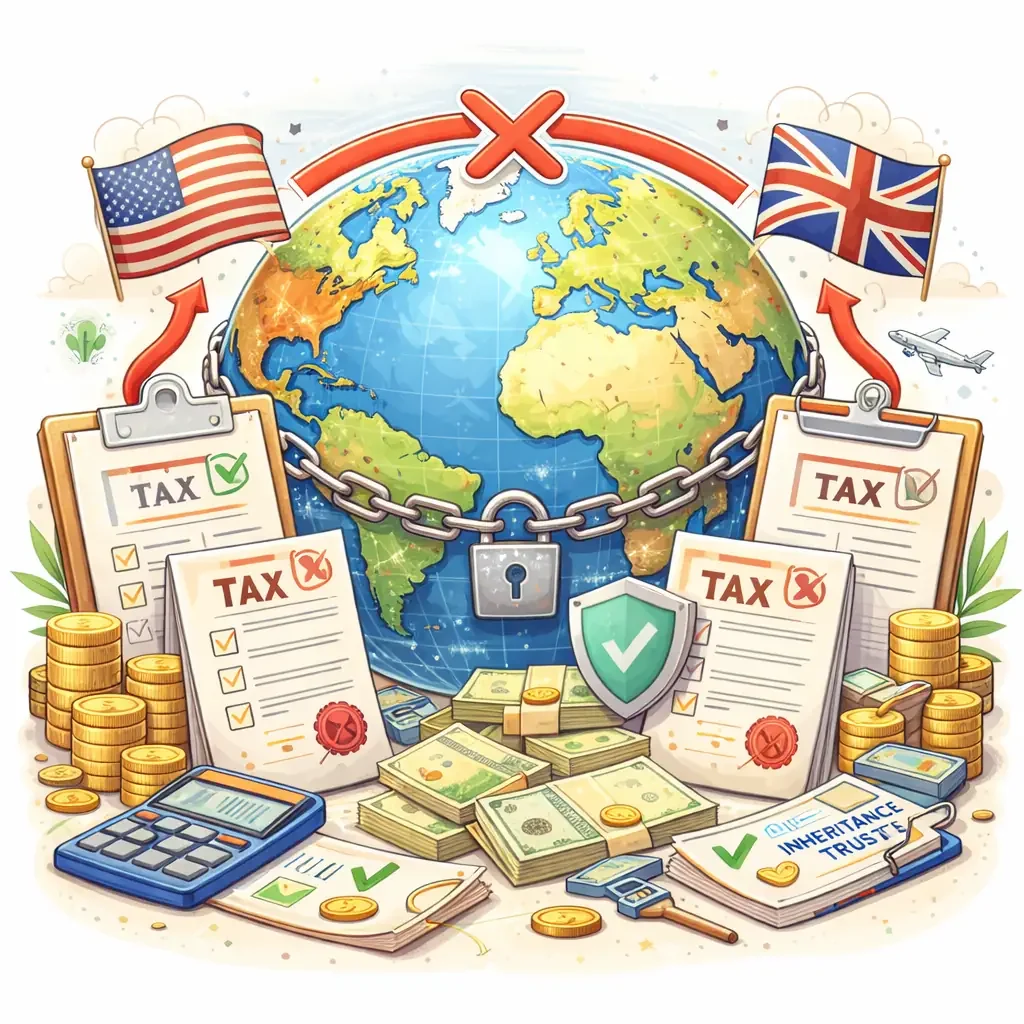
One of the biggest financial challenges for expatriates is double taxation – when two countries both try to tax the same portion of your estate. This can happen if, for example, you are a resident of one country but own property in another, or if your heirs live in a different country. Without precautions, your estate might be taxed twice on the same asset – once by each country. Fortunately, there are strategies to avoid this scenario:
Leverage Tax Treaties: Many countries have agreements called estate tax treaties (or inheritance tax treaties) designed to prevent double taxation of estates. The United States, for instance, has estate and gift tax treaties with over a dozen countries including Canada, UK, Germany, France, and others. These treaties typically contain rules to determine which country has the primary right to tax certain assets or estates, and they often allow a tax credit in one country for taxes paid in the other. In practice, a treaty can significantly increase the tax-free allowance for your estate or eliminate taxes in one jurisdiction. Always check if there’s a treaty between the relevant countries; if so, structure your plan to take full advantage of it. (For example, under the U.S.-U.K. estate tax treaty, a UK resident U.S. citizen gets to use the much larger U.S. exemption amount for U.K. inheritance tax purposes, reducing the overall tax burden.) Treaties are complex, so consult an international tax professional to interpret the provisions for your situation.
Use Credits and Exemptions: Even without a treaty, many countries offer unilateral relief via foreign tax credits. This means if you paid inheritance/estate tax to one country, another country will give you a credit for that amount against their own tax. For instance, if you owed tax on a property abroad and also to the U.S., the U.S. may credit the foreign tax paid, so you’re not double-taxed. Understanding each country’s credit system is key to efficient planning. Tax treaties generally formalize this by either an exemption method (one country’s tax is waived) or a credit method (tax paid to one country counts against tax owed to the other).
Strategic Ownership Structures: Another way to mitigate double taxation is to structure how you own assets. Trusts and legal entities can be used to isolate assets to one jurisdiction. For example, placing an overseas property into a trust or holding company might remove it from your personal estate, so only one set of tax laws applies. A properly set up trust can also avoid multiple probate processes and smoothly transfer assets to heirs without direct estate taxes each time. Be careful: not all countries recognize trusts, and some impose their own taxes on assets in foreign trusts. This strategy should be guided by an expert who understands both countries’ laws.
Insurance and Gifting Strategies: Some expats purchase life insurance or use gifting during their lifetime to reduce the estate that will be taxed. Life insurance payouts can sometimes be arranged to be tax-free or taxed in just one country. Gifting assets to your heirs while you’re alive (subject to gift tax rules) is another method to avoid heavy estate taxes later, especially if you relocate to a country with lower gift tax thresholds.
In summary, double taxation can be avoided with foresight. Make sure to work with professionals who will identify any tax treaty benefits and structure your asset ownership in a tax-efficient way. The goal is that each asset in your estate gets taxed at most once, at the lowest effective rate possible, in one jurisdiction.
Wills and Powers of Attorney for Expatriates
Having a valid will is essential for anyone, but if you own assets in more than one country, your estate plan may need multiple coordinated wills or other estate documents. Here’s how to handle your estate documents as an expat:
Consider Multiple Wills: It’s often recommended to have a separate will for each country where you have significant assets. A will must meet the legal requirements of the country where it’s executed to effectively transfer property there. For example, a will written under U.S. law might not cover the transfer of your apartment in Europe according to European legal procedures. By creating a local will in the foreign country (while also maintaining your main will at home), you can ensure that local assets are handled smoothly. It’s not uncommon for expats to have more than one will. However, this must be done carefully – wills need to be drafted so that they don’t accidentally revoke or conflict with each other. Professional guidance is crucial to align multiple wills; typically, each will should specify it only covers the assets in its respective jurisdiction. With DK Law Group’s help, you can draft wills that are valid in each country and harmonized to carry out your overall wishes.
Update Beneficiaries and Titles: Aside from wills, check if titling assets or beneficiary designations can streamline things. In some countries, you can use beneficiary designations on accounts or co-ownership arrangements that bypass the need for a will entirely. For example, Transfer-on-Death (TOD) accounts or life insurance beneficiary forms should be updated to reflect your current situation. Ensure these align with your wills so there’s no contradiction.
Power of Attorney (POA): A power of attorney designates a trusted person to make decisions on your behalf if you become incapacitated. As an expatriate, you might need separate POA documents in each country as well. A U.S. power of attorney may not be recognized by banks or authorities overseas due to language or format requirements, and vice versa. It’s wise to appoint someone in your home country to handle assets there and someone in your host country for local matters (or one person who is able to coordinate both). These agents can be given financial and/or healthcare decision-making power depending on your needs. Make sure your chosen agents know about your international situation and have copies of the relevant documents. At DK Law Group, we help draft durable powers of attorney that comply with each jurisdiction’s laws, so that if anything happens to you, your affairs can be managed without court interventions.
Healthcare Directives: While focusing on assets is important, don’t forget medical directives. If you have strong wishes about medical treatment, consider creating an advance healthcare directive in your country of residence (and ensure it’s translated or valid as needed in other places you spend a lot of time). This might not directly affect your estate, but it’s a critical part of planning while living abroad, especially if family members would have to make decisions across borders.
Keep Documents Accessible: Store your estate planning documents safely and give copies to relevant persons. It’s often best to keep originals of each will in the country it pertains to (for easy access in local probate), and inform your executor or lawyer of their locations. Also, maintain a list of all your assets globally and key contacts (lawyers, financial advisors) for your executor. Clear instructions and organized documents will make it much easier for your family to settle your affairs when the time comes.
By having the right wills and powers of attorney in place, you ensure that no matter where something happens to you, there is a legal mechanism ready to take care of your property and your personal wishes. This is peace of mind that is well worth the effort for anyone living an international life.
How DK Law Group Can Help with Your International Estate Plan
At DK Law Group, we understand the complexities of international estate planning. Our experienced attorneys have helped many global families and expatriates create comprehensive plans that cover assets in multiple jurisdictions. Here’s how we can assist you:
Personalized Cross-Border Strategy: We take the time to learn about all the countries and jurisdictions relevant to your estate. Our team will identify which inheritance laws and tax rules apply in your case. Then we craft a coordinated strategy so that your estate plan works seamlessly across borders, avoiding conflicts between different countries’ laws.
Navigating Tax Laws and Treaties: Our attorneys are well-versed in international tax issues, such as estate and inheritance tax systems abroad and U.S. tax obligations for expats. We will help you utilize tax treaties (if available)and other tools to minimize double taxation on your estate. From using foreign tax credits to advising on trusts or entities, we aim to protect your wealth from unnecessary taxation.
Drafting Wills, Trusts, and POAs: DK Law Group can draft all the estate documents you need, making sure each is valid in the proper jurisdiction. This includes preparing multiple wills when appropriate, establishing trusts to hold international assets, and setting up powers of attorney both in the U.S. and overseas. We coordinate these documents so they complement each other and follow your overarching estate objectives.
Coordination with Local Experts: We maintain relationships with a network of legal professionals worldwide. If your situation calls for it, we’ll collaborate with trusted attorneys or advisors in other countries to address local requirements (for example, notarization, translations, or specialized tax advice). This team approach ensures every aspect of your plan is handled by a knowledgeable expert in that region’s law.
Ongoing Support and Updates: International circumstances can change – you might move again, acquire new assets abroad, or laws might be reformed. We provide ongoing support: we can review and update your estate plan regularly to reflect life changes or legal updates. Our goal is to keep your plan current so that it remains effective over time, regardless of changes in your situation.
Holistic Planning for Unique Assets: Our firm also advises on special cases. Whether you’re a business owner overseas, or you have unique assets like artwork or intellectual property, we incorporate those into your estate plan. (For instance, artists and creatives often have intellectual property that needs special handling – see our guide on estate planning for artists for related tips.) We ensure all your assets – traditional or unconventional – are protected under the right legal structures.
Planning your estate as an expat doesn’t have to be overwhelming. With professional guidance, you can achieve clarity and control. DK Law Group prides itself on making the process easy for you, so you can focus on enjoying life abroad. We handle the heavy lifting of legal research, document preparation, and cross-border coordination. The end result is a custom international estate plan that gives you confidence and peace of mind that your legacy is secure.
(As an international resident, you may also need to manage your stateside properties or other legal matters remotely. Our firm can assist with related issues – for example, ensuring any property you retain in the U.S. has clear title and is protected from disputes, or advising on how to prevent problems like professional squatters taking over an unattended home. We strive to be a one-stop resource for expatriates navigating legal challenges both abroad and back home.)
Conclusion
Living internationally opens up a world of opportunities, but it also requires careful planning for the future – especially when it comes to your estate. An international estate plan ensures that your wishes are followed and your loved ones are provided for, without legal turmoil, wherever life takes you. By understanding cross-border laws, avoiding double taxation, and having the right documents in place, you protect your legacy across continents.
Don’t leave the fate of your estate up to chance or foreign bureaucracy. With a solid plan, you take control: you decide who inherits your assets, you minimize taxes, and you spare your family from unnecessary complications. It’s one of the greatest gifts you can give to yourself and your loved ones.
Contact DK Law Group today at (240) 266-0291 or email diana@dklawmd.com to get started on your international estate plan. Our team is ready to help you create a tailored plan that meets your cross-border needs. Wherever in the world you call home, we’ll help ensure your legacy is secure. Don’t hesitate – secure peace of mind for you and your family.
If you found this information helpful, feel free to share this article with fellow expats who might need guidance on estate planning abroad. Ensuring that more people are aware of these issues can save families from heartache and expense down the road. 💼🌍